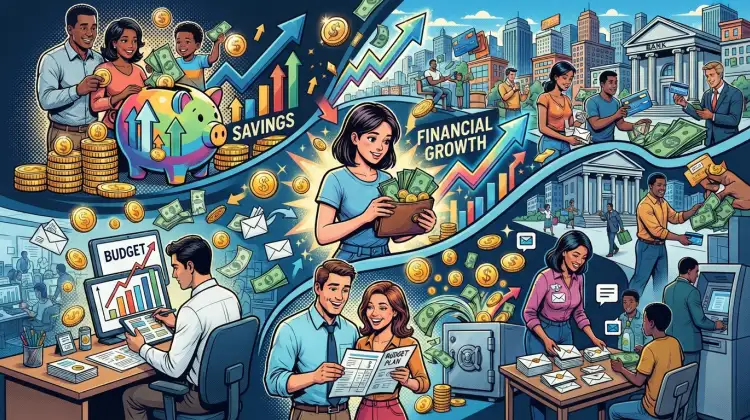
If you have never tracked your spending, the sheer number of budgeting systems can be paralyzing. The good news is that every popular method does the same basic job: it forces you to decide where your money goes before it disappears. According to the Federal Reserve's Survey of Household Economics and Decisionmaking, a meaningful share of U.S. adults say they could not cover a $400 emergency expense with cash, which is exactly the kind of gap a working budget closes. This guide compares the best budgeting methods for beginners, explains who each one suits, and shows you how to start this week.
Why a Budget Beats Willpower
Budgets work because they replace vague intentions with named categories and limits. Behavioral research on mental accounting, popularized by economist Richard Thaler, shows that people spend more carefully when money is assigned to a specific purpose. A budget also creates a feedback loop: you compare what you planned with what actually happened, then adjust. That loop matters more than picking the "perfect" method. The U.S. Financial Literacy and Education Commission, which coordinates resources at MyMoney.gov, recommends starting with a written spending plan and reviewing it monthly rather than aiming for immediate perfection.
Before choosing a method, gather three numbers: your monthly after-tax income, your fixed costs (rent, utilities, insurance, loan payments), and your average spending on variable categories like groceries and dining. Two or three months of bank and credit card statements are enough to build a realistic baseline.
Method 1: The 50/30/20 Rule
The 50/30/20 rule divides after-tax income into three buckets: 50% for needs, 30% for wants, and 20% for savings and debt repayment beyond minimum payments. It was popularized by Senator Elizabeth Warren and her daughter Amelia Warren Tyagi in their book All Your Worth.
- Needs (50%): housing, groceries, utilities, health insurance, minimum loan payments, transportation to work.
- Wants (30%): dining out, streaming services, hobbies, travel, upgraded phone plans.
- Savings and debt (20%): emergency fund, retirement contributions, extra payments on credit cards or student loans.
On a $4,500 monthly take-home income, that means $2,250 for needs, $1,350 for wants, and $900 toward savings and debt. This is often the best starting point for beginners because it requires only three decisions. Its weakness is that it breaks down in high-cost cities, where housing alone can exceed 50% of income.
Method 2: Zero-Based Budgeting
Zero-based budgeting assigns every dollar of income to a category until income minus allocations equals zero. It is the method behind budgeting apps such as YNAB (You Need A Budget) and is favored by people who want tight control or who are paying down debt aggressively.
Example: you earn $4,000. You allocate $1,400 to rent, $400 to groceries, $150 to utilities, $300 to a car payment, $200 to savings, and so on until nothing is unassigned. The discipline is the point, but it takes more time each month, especially at first. If you try it, expect to spend 30 to 60 minutes on your first few budgets.
Method 3: Envelope Budgeting (Cash or Digital)
Envelope budgeting gives each spending category a fixed amount, traditionally in physical cash envelopes. When the grocery envelope is empty, you stop spending on groceries until the next month. Digital versions exist in apps, but the cash version can be powerful for categories where you overspend, because handing over bills feels different from tapping a card.
This method works well for people with variable income or a tendency to impulse-spend. Its main drawback is that it is impractical for online bills and subscriptions, so most users combine envelopes for discretionary spending with automatic payments for fixed costs.
Method 4: Pay-Yourself-First
Pay-yourself-first flips the order: you move money to savings and investments as soon as you are paid, then live on what remains. Automating a transfer to a high-yield savings account or an IRA on payday removes the need for constant decisions. The IRS publishes annual contribution limits for IRAs and 401(k) plans, which are useful guardrails when setting savings targets. This approach pairs well with any of the methods above and is especially effective for beginners who struggle to save consistently.
How to Choose and Start
- Track one month of spending without changing your behavior, so your baseline is honest.
- Pick the simplest method that fits your income pattern. Steady paycheck: 50/30/20. Irregular income: envelope or pay-yourself-first. Debt payoff focus: zero-based.
- Automate fixed costs and savings so the important items happen without willpower.
- Review monthly. Compare planned versus actual, and adjust one or two categories rather than rebuilding everything.
- Build a small emergency fund first. Even $500 to $1,000 prevents a car repair from becoming credit card debt.
Whichever method you choose, give it at least three months before judging it. Budgeting is a skill, and the first month is always the messiest.
What to Remember
The best budgeting method for beginners is the one you will actually maintain. The 50/30/20 rule offers the fastest start, zero-based budgeting offers the most control, envelope budgeting offers the strongest spending guardrails, and pay-yourself-first makes saving automatic. Start with your real numbers, automate what you can, and review monthly. Consistency beats complexity every time.