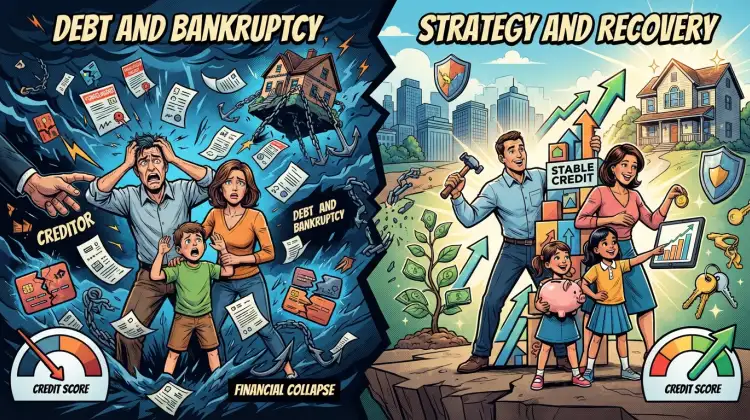
Bankruptcy is a legal process that can wipe out or restructure overwhelming debt, but it comes with lasting financial consequences. For Americans drowning in credit card balances, medical bills, or collection lawsuits, filing can feel like the only exit. Before you decide, it helps to understand exactly what bankruptcy does, what it costs, and how it affects your credit for years afterward.
This guide breaks down the pros and cons of bankruptcy under US law, compares Chapter 7 and Chapter 13, and explains when filing makes sense versus when it does more harm than good.
How Bankruptcy Works in the United States
Bankruptcy is governed by federal law and administered through US Bankruptcy Courts. Most consumers file under one of two chapters:
- Chapter 7 — a liquidation that discharges most unsecured debts, such as credit cards, medical bills, and personal loans. It typically takes three to five months. To qualify, you must pass the means test, which compares your income to your state's median income.
- Chapter 13 — a reorganization that lets you keep property while repaying some debts through a three- to five-year court-approved plan. It suits filers with regular income who are behind on a mortgage or car loan.
Both chapters trigger the automatic stay, a court order that immediately stops most collection calls, wage garnishments, and foreclosure proceedings. A bankruptcy trustee oversees the case, and a judge approves the final discharge.
The Pros: Debt Relief and Legal Protection
The strongest argument for filing is the fresh start it provides.
- Discharge of unsecured debt. A Chapter 7 discharge eliminates most credit card balances, medical debt, and personal loans without further payment. Chapter 13 discharges remaining eligible debt after your repayment plan ends.
- Immediate relief from collection. The automatic stay halts lawsuits, garnishments, utility shutoffs, and foreclosure actions the moment you file.
- Protection of essential property. Exemptions vary by state, but most filers keep a home, a vehicle, clothing, household goods, and retirement accounts such as 401(k)s and IRAs.
- No income tax on discharged debt. Unlike forgiven debt outside bankruptcy, canceled debt in a bankruptcy case is generally not treated as taxable income.
- A path to rebuilding credit. A discharge removes the weight of delinquent accounts, and many filers see credit scores recover within two to three years.
The Cons: Credit Damage, Costs, and Long-Term Limits
Bankruptcy is not free, fast, or painless.
- Severe credit score impact. A Chapter 7 filing stays on your credit report for 10 years; Chapter 13 stays for seven. Expect a drop of 100 to 200 points or more, depending on your starting score.
- Filing and attorney costs. Court filing fees run several hundred dollars per chapter, and attorney fees commonly range from roughly $1,000 to $3,500 or more. You can file pro se, but mistakes are costly.
- Limited access to new credit. Lenders may deny you mortgages, auto loans, or credit cards for years, and approved loans often carry higher interest rates.
- Property risk. Non-exempt assets, such as a second home, valuable collectibles, or cash above your state's exemption limit, can be sold by the trustee in Chapter 7.
- Long repayment commitment. Chapter 13 requires three to five years of disciplined plan payments, and missed payments can lead to dismissal.
- Non-dischargeable debts. Student loans, most tax debt, child support, alimony, and some court judgments typically survive bankruptcy.
Chapter 7 vs. Chapter 13: A Quick Comparison
Choosing the right chapter depends on income, assets, and which debts you need to address.
- Chapter 7 is faster and discharges more debt, but it requires passing the means test and may force the sale of non-exempt property.
- Chapter 13 is slower and more expensive, but it lets you cure mortgage arrears, protect non-exempt assets, and strip certain liens.
Before filing, you must complete credit counseling from an approved agency within 180 days, followed by a debtor education course before discharge. These requirements are mandatory under the Bankruptcy Abuse Prevention and Consumer Protection Act of 2005.
Alternatives to Consider First
Bankruptcy is not the only option, and it should be a last resort when other strategies fail.
- Debt consolidation loans combine balances into one payment, often at a lower rate.
- Debt management plans through nonprofit credit counseling agencies negotiate reduced interest and a single monthly payment.
- Debt settlement negotiates lump-sum payoffs for less than the full balance, though it damages credit and has tax implications.
- Hardship programs from lenders or servicers can pause or reduce payments temporarily.
If your debt is manageable and your income is stable, these routes usually preserve your credit better than filing. If you are facing foreclosure, wage garnishment, or lawsuits you cannot afford to defend, bankruptcy may be the more protective choice.
What to Remember About Bankruptcy Pros and Cons
Bankruptcy offers real relief: it stops collection actions, discharges many unsecured debts, and protects essential assets. The trade-offs are equally real: a decade of credit damage, upfront costs, possible asset loss, and debts that survive the process. The right decision depends on your income, the types of debt you owe, and whether you can realistically repay. Consult a licensed bankruptcy attorney in your state and a nonprofit credit counselor to compare all options before you file.