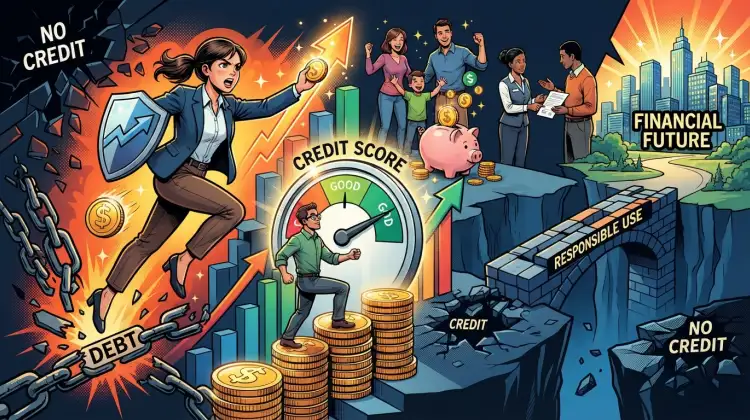
Building credit from scratch is a process, not a single event. If you have no credit history, lenders and landlords have nothing to evaluate, so they either decline you or charge you more. The good news is that the US credit system is designed to reward consistent, low-risk behavior over time. With the right accounts and a few disciplined habits, most people can establish a usable credit score within six to twelve months.
Understand What Actually Goes Into a Credit Score
Nearly all lenders use FICO or VantageScore models. FICO scores are the most widely used, and its scoring breakdown is public:
- Payment history (35%) — whether you pay on time, every time.
- Amounts owed (30%) — how much of your available credit you use, known as credit utilization.
- Length of credit history (15%) — how long your accounts have been open.
- New credit (10%) — recent applications and hard inquiries.
- Credit mix (10%) — a blend of revolving accounts like cards and installment loans.
Two details matter enormously when you are starting out. First, payment history is the single largest factor, so one missed payment can set you back significantly. Second, the three nationwide credit bureaus — Equifax, Experian, and TransUnion — do not share data with each other. A creditor may report to only one or two bureaus, which is why your scores can differ across providers.
Start With Accounts You Can Actually Qualify For
Secured credit cards
A secured card requires a cash deposit, typically $200 to $500, that becomes your credit limit. Because the issuer holds collateral, approval standards are far more forgiving than for unsecured cards. Most major issuers report to all three bureaus, and many will review your account for an upgrade to an unsecured card after six to twelve months of on-time payments. The deposit is refundable when you close the account in good standing or graduate to an unsecured product.
Credit-builder loans
A credit-builder loan works in reverse. The lender places the borrowed amount in a savings account or certificate of deposit, you make fixed monthly payments, and you receive the funds at the end of the term. The lender reports your payments to the bureaus, so you build an installment payment history while saving money. These are offered by many community banks, credit unions, and online lenders.
Becoming an authorized user
If a trusted family member adds you as an authorized user on a well-managed card, that account's history can appear on your credit reports. You do not need to use the card or even hold it. The benefit depends on the issuer reporting authorized user activity, and it disappears if you are removed from the account — so treat it as a head start, not a foundation.
Use the Accounts the Way They Are Meant to Be Used
Getting approved is only half the task. How you manage the account determines whether your score rises.
- Pay on time, every month. Set autopay for at least the minimum so a forgotten due date never becomes a 30-day late mark, which can stay on your reports for seven years.
- Keep utilization below 30%, and ideally under 10%. If your limit is $300, that means carrying a balance under $90 — and paying it in full is even better because issuers typically report your statement balance, not your payoff amount.
- Pay more than once a month if needed. On a small limit, a single tank of gas can push utilization above the threshold. A mid-cycle payment resets the reported balance.
- Keep old accounts open. Closing your first card shortens your average account age and reduces total available credit, both of which can lower your score.
- Apply sparingly. Each hard inquiry typically costs a few points, and multiple applications in a short window signal risk to lenders.
Monitor Your Progress and Fix Problems Early
You are entitled to a free credit report every week from each of the three bureaus through AnnualCreditReport.com, the federally authorized source. Check all three reports for errors such as accounts that are not yours, duplicate collections, or payments marked late when you paid on time. You can dispute inaccuracies directly with the bureau online, and bureaus generally must investigate within 30 days.
Many banks and card issuers also provide free FICO or VantageScore access, which lets you track trends without paying for monitoring. Expect to see movement within three to six months of active, on-time use, and a solid score within a year or two depending on your starting point and credit mix.
What to Remember
Building credit from scratch comes down to three things: open at least one account that reports to all three bureaus, pay every bill on time without exception, and keep your balances low relative to your limits. Secured cards and credit-builder loans are the most reliable starting points because they are accessible and report consistently. Add time, avoid unnecessary applications, and check your reports for errors, and you will build a history that lenders can trust.